Asia Orchestra Week 2025 on YouTube
The Agency for Cultural Affairs Arts Festival is an annual event that has been held every year since 1946.
Asia Orchestra Week, which began in 2002, invites orchestras from across the Asia-Pacific region to perform.
More than 60 orchestras from 16 countries and regions deliver colorful and passionate music.
Asia Orchestra Week is not just an international classical music event but a forward-looking initiative through the orchestras,
universal cultural assets with great potential, to promote mutual understanding and empathy among people living in the Asia-Pacific region.
※Some programs are not included in YouTube distribution.




Performance
-
Live recording
Oct. 4 Sat 15:00 Start(14:15 Opening)
Hyogo Performing Arts Center - KOBELCO Main HallHyogo Performing Arts Center Orchestra
Conductor:Daichi DeguchiRachimaninov: Piano Concerto No. 2 in C minor, Op. 18 Hiroshi Ohguri: Fantasy on Osaka Folk Tunes Mussorgsky (Orchestrated by Ravel): Pictures at an Exhibition -
Live recording
Oct. 13 Mon 15:00 Start(14:15 Opning)
Hyogo Performing Arts Center - KOBELCO Main HallHong Kong Philharmonic Orchestra
Conductor:Lio Kuokman Piano:Kyohei SoritaCharles Kwong: Festina lente (HK Phil commission, Japan premiere) Tchaikovsky: Piano Concerto No. 1 in B-flat minor, Op. 23 Tchaikovsky: Symphony No. 5 in E minor, Op. 64 -
Oct. 14 Tue 19:00 Start(18:15 Opening)
MUZA Kawasaki Symphony HallHong Kong Philharmonic Orchestra
Conductor:Lio Kuokman Piano:Kyohei SoritaCharles Kwong: Festina lente (HK Phil commission, Japan premiere) Tchaikovsky: Piano Concerto No. 1 in B-flat minor, Op. 23 Tchaikovsky: Symphony No. 5 in E minor, Op. 64 -
Symposium
Oct. 12 Sun 10:00〜12:00
Hyogo Performing Arts Center OrchestraThe expanding Asian orchestra market
Asia as seen from Japan, Asia and Japan as seen from Hong Kong. The content industry and orchestras The environment to nurture the next generation of orchestral musicians
(Based on examples from Hong Kong Philharmonic Orchestra and PAC)
Program Notes
Hiroshi Ohguri:Fantasy on Osaka Folk Tunes
Hyogo Performing Arts Center Orchestra, Daichi Deguchi, Conductor
Oct. 4 Sat. Live recording Venue : Hyogo Performing Arts Center -KOBELCO Main Hall
The sounds of festival music seem to rise from distant memories. We feelnostalgic for its bustle, perhaps because it reflects the quintessentialimage of Japan we envision. Fantasy on Osaka Folk Tunes, by HiroshiOhguri (1918–1982), a leading composer from Osaka, captures that veryatmosphere.
Hiroshi Ohguri was born in Shimanouchi, Minami-ku (now Chuo-ku),Osaka, into a family running a sundries business. While playing the hornin the brass band at Tennoji Commercial High School, he began to studycomposition on his own. He subsequently performed as a horn player inseveral orchestras before, during, and after World War II. In 1950,encouraged by the conductor Takashi Asahina, he joined the KansaiSymphony Orchestra (reorganized as the Osaka Philharmonic Orchestrain 1960), remaining a member until 1966. Ohguri’s reputation as acomposer rose dramatically with the 1955 premiere of his opera The RedCloak, conducted by Asahina and staged by the Kansai Opera.Thereafter, he served in what would now be called the role ofcomposer-in-residence, producing numerous works for Asahina and theorchestra. His style—infused with Japanese scales and the distinctive,vibrant spirit of Osaka—earned him the nickname “the Bartók of theEast.”
Fantasy on Osaka Folk Tunes was composed in 1956, in anticipation ofAsahina’s upcoming guest appearance with the Berlin Philharmonic, withits performance in Berlin in mind. The premiere took place on May 28 ofthat year at the “Grand Concert for the Opening of the Kobe ShimbunHall,” with Asahina conducting the Kansai Symphony Orchestra. Thefollowing month, during his European tour, he conducted the work withthe Tonkünstler Orchestra, before appearing with the BerlinerPhilharmoniker on June 21 and 22. Performed alongside Beethoven’sSymphony No. 4 and other works, Ohguri’s Fantasy was met with greatacclaim, and the full score was presented to the orchestra.
The work opens with a solemn introduction reminiscent of the ancientJapanese music, gagaku and kagura. Percussion is used to striking effect,drawing listeners in through the repeated sonorities of the strings. Themain section incorporates rhythms from danjiri-bayashi of the TenjinFestival and shishimai-bayashi of the Ikukunitama Shrine summer festival.These were not transcribed with precision, but rather shaped from thepatterns deeply embedded in Ohguri’s memory. The distinctive timbresof percussion, such as chanchiki and kagura bells, evoke the swelteringheat of an Osaka summer.
A folk-like theme in the flute and cor anglais intertwines with waves ofnostalgic strings, leading to a climax in which the percussion bursts forth.In 1974, Ohguri arranged the work himself for wind ensemble—theOsaka Municipal Symphonic Band (now Osaka Shion Wind Orchestra)—further broadening its recognition.
Seiya Osaka, Music Writer
Modest Mussorgsky(Orchestrated by Ravel):Pictures at an Exhibition
Hyogo Performing Arts Center Orchestra, Daichi Deguchi, Conductor
Oct. 4 Sat. Live recording Venue : Hyogo Performing Arts Center -KOBELCO Main Hall
In the latter half of the 19th century, Modest Mussorgsky (1839–1881), amember of the Russian nationalist composers’ group known as “TheFive” (*Note), left behind many works. Among them is Pictures at anExhibition, one of his most celebrated piano compositions, laterorchestrated by Maurice Ravel (1875–1937) into a brilliant suite.Acclaimed as a master of orchestration, Ravel drew a dazzling array ofcolors from the Russian-inflected original, helping to establish the work’sinternational reputation.
Though born into a noble family, Mussorgsky lost his estate after theEmancipation Reform of 1861 and supported himself as a low-rankingcivil servant while continuing to compose. In his later years, he struggledwith poverty and alcoholism, leaving much of his music unfinished. Yethis works, characterized by originality, have earned lasting acclaim.Among the few completed during his lifetime are the piano suite Picturesat an Exhibition and the opera Boris Godunov.
Mussorgsky composed Pictures at an Exhibition in 1874 after visiting aposthumous exhibition of works by his late friend, the painter andarchitect Victor Hartmann. The suite consists of ten piano pieces inspiredby the impressions he drew from the paintings and sketches on display.Mussorgsky’s music, brimming with his distinctive and unrestrainedimagination, is striking in itself, but what was truly groundbreaking wasthe recurring “Promenade,” placed at the opening and betweenmovements. Said to reflect his own feelings as he strolled among thepictures, it lends a sense of unity to the entire work. The ten movementsvary in character—some rooted in folklore, some humorous, othersmajestic. Yet much about the direct connection between Hartmann’s artand Mussorgsky’s music—such as which specific pictures he actually saw—remains uncertain. The suite is better regarded as Mussorgsky’s own setof musical paintings, freely drawn on Hartmann’s motifs. AlthoughMussorgsky had great confidence in the work, it was never performedduring his lifetime; he died seven years after its completion.
All but forgotten after Mussorgsky’s death, the piece was brought back toprominence by the Russian conductor Serge Koussevitzky. Havingemigrated to Paris to escape the Russian Revolution, he commissionedRavel in 1922 to orchestrate the suite as new repertoire for his “ConcertsKoussevitzky.” The orchestral version, premiered at the Paris Opéra onOctober 19 of that year, was an immediate success, and both the workand Mussorgsky’s name soon gained worldwide recognition.Ravel’sorchestration was not the first, and several others have since followed.Yet it is his version that has become the standard in the orchestralrepertoire today. Its growing popularity has, in turn, renewed interest inMussorgsky’s original piano score, which is now frequently performed bymany pianists.
(*Note): The Five — Mily Balakirev, César Cui, Alexander Borodin, NikolaiRimsky-Korsakov, and Modest Mussorgsky — were a group of composerswho distanced themselves from Russia’s music academies, which werestrongly influenced by German and Austrian traditions, and soughtinstead to create a distinctly national music of their motherland.
Seiya Osaka, Music Writer
CHARLES KWONG (b. 1985) Festina lente(Japan Premiere, HK Phil Commission)
Hong Kong Philharmonic Orchestra, LioKuokman,Conductor
Oct. 13 Mon. Live recording Venue:Hyogo Performing Arts Center -KOBELCO Main Hall
Program note by the composer, Charles Kwong
With Festina lente I began from a simple, intuitive idea: I wanted to write an orchestralminiature that is fast and slow at the same time, at all times. This seemingly straightforwardconcept grew out of two interconnected fascinations.
The first stems from my recent but somewhat half-baked exploration in the theories ofquantum gravity where I encountered John Wheeler’s famous and intriguing description ofspacetime at its smallest scale as a “foamy” texture rather than the smooth continuumassumed by classical physics. In a lecture he likened it to water: from afar, a river seemsfrozen and still; closer, one sees its flow and movements; in its closest, foaming bubbles. Iam not sure whether I have understood such a theory of time correctly, but this vision of timeas a texture rather than a continuum nonetheless fascinated me, and led me to imagine howtime might operate differently at its smallest scales than in our everyday perception.
The second fascination arose from a project last summer in the Furka Pass, Switzerland,where I did extensive hydrophone recordings with the water at the source of the RhôneRiver. In editing the recordings I accidentally discovered that, when slowed down byextreme factors — eight or sixteen times — the familiar trickling and tinkling of flowing watertransformed into discrete pitches, almost like a marimba cadenza in a contemporarycomposition or an irregular, atonal walking bass.
These two fascinations — both revolving around the act of zooming in and out of time —shaped the foundation of this piece. I imagined what might happen when several timelines,each operating on different scales, overlap to form a texture of time that is smooth and yet atthe same time discrete, articulated by sounds. Festina lente progresses as a succession ofsuch textures: episodes that are both intermezzi leading to the next and a sequence ofvariations among themselves. These “variations” do not develop in the classical sense of amelody undergoing transformation, but instead offer different unfoldings of one samemusical seed: the interval of a perfect fifth. In this way, the piece may be heard as a snapshotor fragment from an unending process of transition, itself made of countless smallertransitions at multiple microscopic scales.
The title Festina lente comes from the Latin adage meaning “make haste slowly” or “morehaste, less speed.” The Chinese version of the title, is drawn from Sun Tzu: “as swift as thewind, as composed as the forest.” I find this paradoxical union of haste and slowness to be adefining quality of the work, and thus chose it as both its name and, in a sense, its musicalindication.
Pyotr Ilyich Tchaikovsky:Piano Concerto No. 1 in B-flat minor, Op. 23
Hong Kong Philharmonic Orchestra, LioKuokman, Conductor, Kyohei Sorita, Piano
Oct. 13 Mon. Live recording Venue:Hyogo Performing Arts Center -KOBELCO Main Hall
Pyotr Ilyich Tchaikovsky (1840–93) stands as one of Russia’s most celebrated composers. Hisworks, with melodies imbued with poignant melancholy and harmonies rich in distinctivecolor, have long captured the hearts of many in Japan. The Piano Concerto No. 1 is amasterpiece that encapsulates this very allure, allowing audiences to appreciate both itsresplendent orchestral sonorities and the pianist’s virtuosity.
Tchaikovsky was born in Votkinsk, an industrial city in the Ural region, as the second son of amining engineer. The family came from a distinguished Ukrainian lineage, and their surnamederived from “chaika” (seagull). He began piano lessons at the age of five and quicklyshowed musical talent, but at ten he was admitted to a boarding school in Saint Petersburgspecializing in law, which set him on the path toward a legal career.
After his graduation, he served as a clerk at the Ministry of Justice until 1861, when his lifetook a decisive turn at the age of twenty-one. Through the introduction of acquaintances,Tchaikovsky learned of the newly founded St. Petersburg Conservatory and enrolled andbecame one of its first students, joining the class of the renowned pianist Anton Rubinstein.He resigned from his government post and devoted himself to music, soon revealing hisgifts as a composer.In 1866, he was appointed professor at the Moscow Conservatory,founded by Anton’s brother, the pianist Nikolai Rubinstein—who became his lifelong friend.Thereafter, he went on to compose numerous masterpieces.
The Piano Concerto No. 1 was composed between 1874 and 1875. It was originallyintended as a dedication to Nikolai Rubinstein, but when he heard the work in draft form, heharshly criticized it and demanded revisions. Tchaikovsky did not comply with his words, andthe concerto was ultimately dedicated to Hans von Bülow, the German pianist andconductor. The premiere, held in Boston on October 25, 1875, with Bülow at the piano andBenjamin Johnson Lang conducting, was an overwhelming success. Only then didRubinstein retract his opinion. On November 21 of the same year, he conducted theMoscow premiere with Sergei Taneyev as soloist with great acclaim, and later added theconcerto to his own repertoire, thus helping to spread recognition of its true worth.
The 1st movement, in sonata form, opens with a majestic introduction marked by a forcefulhorn call. This sweeping introduction, uniting piano and orchestra, is perhaps one of themost renowned passages in all of Tchaikovsky’s music. In the main section, the 1st theme,inspired by a Ukrainian folk song, is followed by two interwoven parts of the 2nd theme, Aand B, displaying the composer’s inventiveness, and the music develops in a kaleidoscopicmanner. A Lengthy cadenza is placed here, making the movement so grand that it mightalmost be regarded as a work unto itself. The 2nd movement, in ternary form, begins with anelegant Andante for flute, but its middle section shifts abruptly to a succession of virtuosicpassages for piano and orchestra. The 3rd movement, in rondo form, opens with the 1sttheme in the piano, again derived from the Ukrainian folk song, followed by the lyrical 2ndtheme performed by strings. It builds in intensity toward a triumphant finale.
Seiya Osaka, Music Writer
Pyotr Ilyich Tchaikovsky:Symphony No. 5 in E minor, Op. 64
Hong Kong Philharmonic Orchestra, LioKuokman, Conductor
Oct. 13 Mon. Live recording Venue:Hyogo Performing Arts Center -KOBELCO Main Hall
Symphony No. 5 is regarded as the most powerful in sonority among Tchaikovsky’s sixnumbered symphonies (*Note). Composed in 1888, when he had entered his mature yearsafter numerous personal hardships, it employs a cyclic form in which the opening “fatemotif” reappears in various transformations throughout all movements, creating anoverwhelming sonic drama. Alongside Symphony No. 6 “Pathétique,” composed five yearslater, it is a masterpiece that immortalized Tchaikovsky’s name as a symphonist.
An indispensable figure when speaking of Tchaikovsky during this period is Nadezhda vonMeck. In 1876 the wealthy widow offered him substantial financial support, which continuedfor 14 years and brought great stability to his compositional activities. Beyond the financialaspect, however, it is notable that, although both resided in Moscow, they never once met inperson, maintaining their relationship solely through correspondence—more than 1,200letters in total before it ended. Symphony No. 4, premiered in 1878, was dedicated toMadame von Meck.Around this time, Tchaikovsky was struck by serious crises in his life: theaftermath of a marriage that collapsed in less than a month, the death of his father Ilya, andthe death of his close friend, the pianist Nikolai Rubinstein. As if to avert these ordeals byimmersing himself in creative work, he produced such representative works of his middleperiod as the Violin Concerto, the opera Eugene Onegin, and the Piano Trio In Memory of aGreat Artist.
Out of these circumstances, Symphony No. 5 was completed. Ten years had elapsed sincethe 4th Symphony, and here Tchaikovsky achieved a higher level than ever before in fusingtraditional European music with his own identity rooted in Russian tradition. The premieretook place on November 17, 1888, in St. Petersburg under the composer’s own direction.Although Tchaikovsky was initially disappointed by the lukewarm reception, he regainedconfidence after the success of the Hamburg performance during his concert tour in March1889. When the renowned conductor Arthur Nikisch later added the work to his repertoire,it soon became widely known throughout the world.
The 1st movement, in sonata form, begins with an introduction in which the clarinet plays the“fate motif” in E minor, dark and unhurried. In the main section, a march-like 1st themederived from the motif and a lyrical 2nd theme unfold almost like scenes of a narrative. The2nd movement, lyrical in character, opens with an extended horn solo. In the middle section,the tempo quickens and the “fate motif” is struck with great force. Soon, the music regains itstranquil expression, but within the dreamlike soundscape, the motif reappears. In place of ascherzo, the 3rd movement presents a waltz—one of Tchaikovsky’s original ideas—in whichthree waltzes are played like a prelude to the finale. The 4th movement opens with the “fatemotif” modulated into E major. After repeated strokes of the timpani, the main sectionunfolds with an intensive tone. At its height, the music comes to a complete halt, from whichan overwhelming coda begins. The “fate motif” resounds with majestic breadth, pressingforward with power, and the symphony concludes in radiant triumph.
Seiya Osaka, Music Writer
(*Note):
Symphony No. 1, Winter Daydreams
Symphony No. 2, Little Russian
Symphony No. 3, Polish
Symphony No. 4
Symphony No. 5
Symphony No. 6, Pathétique
In addition, there is the unnumbered Manfred Symphony.
Profile
-
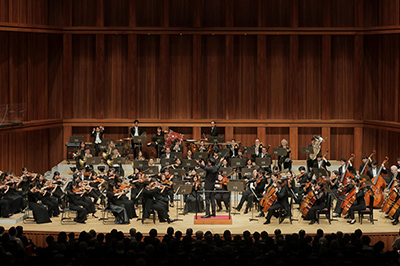
Hyogo Performing Arts Center Orchestra
On January 17, 1995, the Hanshin and Awaji region, in which the city of Kobe (pop. 1.5 million) is located, was hit by a great earthquake. The Great Hanshin-Awaji Earthquake claimed the lives of over 6,400 people and caused serious economic damage estimated at 9,926.8 billion yen. But even while experiencing difficulty accessing just the bare necessities, residents in the stricken region renewed their awareness of the special role that cultural and artistic events had played in their lives.
During the decade following the great Hanshin-Awaji Earthquake of 1995, the courage, persistence, and compassion of Hyogo’s local residents brought about a miraculous renewal of the devastated region. Embodying the hope for a bright future for the community, the Hyogo Performing Arts Center (HPAC) opened in 2005 as a symbol of the spiritual and cultural rebirth of the region. HPAC has now established itself as Japan’s leading cultural institution attracting both domestic and internationally renowned performing art groups to its stages. In August 2019, 14 years since the inauguration, it has proudly welcomed its 7 millionth audience.The Hyogo Performing Arts Center Orchestra (HPAC Orchestra) has been established as a resident orchestra exclusively affiliated with Hyogo Performing Arts Center under artistic direction of Yutaka Sado. During a three-year term, 48 international core members under the age of 35 engage in a variety of performance opportunities including full orchestra and chamber orchestra concerts, a fully-staged opera, and chamber ensemble performances of standard and modern repertoire. They are joined in these performances by leading conductors, guest players and coaches from around the world. The HPAC program offers professional development for Core Members through master-classes and private lessons with visiting artists.
Official Site
-
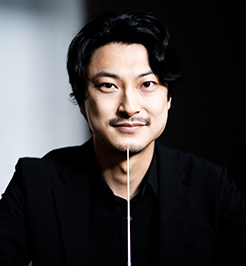
Daichi Deguchi/conductor
Daichi Deguchi is the 1st-prize winner of the Khachaturian International Competition 2021(Conducting) and was awarded the 2nd prize (no 1st prize was given) at the Kussewitzky International Conducting Competition, also winning the Orchestra Special Prize.
Currently Deguchi is serving as Assistant Conductor of Orchestre Philharmonique royal de Liège (2024/25 season)
Born in Osaka, Japan, Deguchi learned piano and horn since childhood. After graduating from the faculty of law at the Kwansei Gakuin University, He studied conducting at the Tokyo College of Music and at die Hochschule für Musik Hanns Eisler Berlin graduated in 2023. Deguchi has studied under Junichi Hirokami, Tatsuya Shimono, Christian Ehwald, Hans-Dieter Baum and others.
Deguchi works with numerous orchestras in Europe, such as Brandenburgisches Staatsorchester Frankfurt, Danube Symphony Orchestra, George Enescu Philharmonic Orchestra, Symphoniker Hamburg, Orchestra Magna Grecia, State Academic Orchestra of the Republic Kazakhstan, and Tallinn Chamber Orchestra among others.
In Japan, Deguchi made his professional orchestra debut at subscription concert of Tokyo Philharmonic Orchestra in July,2022 that led him continuous debut to Japanese orchestras such as City of Kyoto Symphony Orchestra,Yomiuri Nippon Symphony Orchestra,Japan Century Symphony Orchestra,Osaka Philharnony Orchestra, Tokyo Symphony Orchestra among others.
Official Site
©hiro.pberg_berlin
-
Michie Koyama/Piano
Celebrated and gifted, Koyama is one of Japan's leading pianists. Since winning awards at both the International Tchaikovsky Competition and the International Chopin Piano Competition at the start of her career, she has consistently remained at the forefront of her instrument, ceaselessly performing concertos, solo recitals, and chamber music.
The monumental project she began in 2006 to give 24 recitals over the span of 12 years, one each in fall and spring, will conclude in fall of 2017. It was held in six cities: Tokyo (Bunkamura Orchard Hall), Osaka, Sapporo, Sendai, Nagoya, and Fukuoka.
She has appeared not only with the major Japanese orchestras, but also with the Moscow Radio Orchestra (now the Tchaikovsky Symphony Orchestra), Berlin Symphony, Royal Philharmonic, BBC Symphony, English Chamber Orchestra, The Academy of St. Martin in the Fields, Rotterdam Philharmonic, Sinfonia Varsovia, Warsaw Philharmonic, Montreal Symphony, and Baltimore Symphony Orchestra, as well as with many internationally renowned conductors including Fedoseyev, Temirkanov, Dutoit, Marriner, and Ozawa. She has served on the juries of competitions including the International Chopin Piano Competition--in 2010, the year marking the 200th anniversary of Chopin's birth--the International Tchaikovsky Competition, the Long-Thibaud-Crespin Competition, and the ARD International Music Competition.
Following the 2011 Great East Japan Earthquake, she has gone to perform at schools and public facilities in areas affected by the disaster, and in Sendai in 2015 she started a project of which she is the executive producer, entitled, "Bolero: Plaza of Children's Dreams."
She has an exclusive CD contract with Sony Music Japan International.
Her 30th and most recent recording for the label, her first Bach album, of the Goldberg Variations, received a special commendation from the magazine "Record Geijutsu."
Koyama has also published a book of her own essays, published by KADOKAWA.
She has been awarded the 2005 Agency for Cultural Affairs National Arts Festival Grand Prize for Music, the 2013 TonenGeneral Music Award in Western Classical Music, a 2013 Japan Record Academy Award for Instrumental Music (for her album, "Chaconne"), the 2015 NHK Symphony Orchestra Arima Prize, and the 2015 Agency for Cultural Affairs National Arts Festival Excellence Award for Music, in addition to a Music Award at the 28th Music Pen Club Award for Solo Performance of Classical Music in 2015, and an Arts Award from the Ministry of Education, Culture, Sports, Science and Technology in 2016.
Koyama completed both her undergraduate and graduate studies at the Tokyo University of the Arts(formerly the Tokyo National University of Fine Arts and Music). She studied under Michiko Yoshida and Hiroshi Tamura.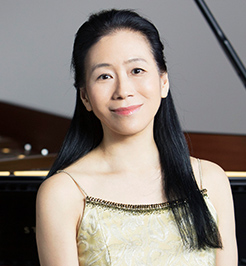
©ND CHOW
-
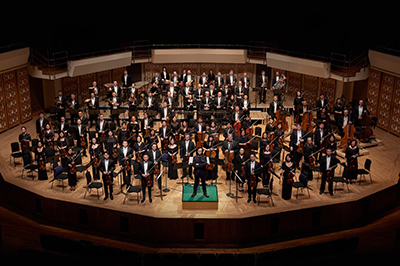
Hong Kong Philharmonic Orchestra
The Hong Kong Philharmonic Orchestra (HK Phil) is regarded as one of the leading orchestras in Asia. Presenting more than 150 concerts over a 44-week season, the HK Phil attracts more than 200,000 music lovers annually. The HK Phil won the prestigious UK classical music magazine Gramophone’s 2019 Orchestra of the Year Award – the first orchestra in Asia to receive this accolade.
公式サイト
Tarmo Peltokoski will become the HK Phil’s Music Director beginning in the 2026/27 season, after serving as Music Director Designate in 2025/26. Currently, Long Yu serves as Principal Guest Conductor, Lio Kuokman is Resident Conductor, and Daniele Gatti is Artistic Partner.
The HK Phil has flourished in the last two decades under Jaap van Zweden (Music Director, 2012–2024) and Edo de Waart (Artistic Director and Chief Conductor, 2004–2012). The orchestra successfully completed a four-year journey through Wagner’s Ring Cycle, performing and recording one opera from the cycle annually from 2015 to 2018. The concert performances were well received, and the live Naxos recordings were praised by critics, and garnered the Gramophone Orchestra of the Year Award 2019. Other recent recording projects include Mahler’s Symphony no. 10, Shostakovich’s Symphony no. 10, and Tchaikovsky’s Symphony no. 6 and Piano Concerto no. 1.
The HK Phil has toured extensively across Mainland China. The orchestra undertook a major tour in 2017 to Seoul, Osaka, Singapore, Melbourne and Sydney in celebration of the 20th anniversary of the establishment of the Hong Kong Special Administrative Region. The HK Phil celebrated its 50th anniversary in the 2023/24 season, touring Europe, Asia, and Mainland China, performing in 22 cities across ten countries.
Conductors and soloists who have recently performed with the orchestra include Anja Bihlmaier, Stéphane Denève, Christoph Eschenbach, Paavo Järvi, Andrés Orozco-Estrada, Vasily Petrenko, Krzysztof Urbański, Joshua Bell, Ning Feng, Boris Giltburg, Lang Lang, Leonidas Kavakos, Olivier Latry, Yo-Yo Ma and Akiko Suwanai. The HK Phil promotes the work of Hong Kong and Chinese composers through an active commissioning programme, and it has released recordings on the Naxos label featuring Tan Dun and Bright Sheng, each conducting their own compositions.
The HK Phil runs diverse education and community programmes in schools and outdoor spaces, bringing music into the hearts of tens of thousands of children and families every year.
The Swire Group has been the Principal Patron of the HK Phil since 2006. Through this current sponsorship donation, the largest in the orchestra’s history, Swire endeavours to foster access to classical music and stimulate cultural participation in Hong Kong and the Chinese Mainland. A critical aspect of this is engaging with the community, especially young people. The sponsorship will also help promote local artistic excellence and enhance Hong Kong’s reputation as one of the great cities in the world.
Thanks to a significant subsidy from the Government of the HKSAR and long-term funding from Principal Patron Swire, the Hong Kong Jockey Club Charities Trust and other supporters, the HK Phil now boasts a full-time annual schedule of core classical repertoire and innovative popular programming, extensive education and community programmes, and collaborations with, amongst others, Hong Kong Ballet, Opera Hong Kong and the Hong Kong Arts Festival. The history of the HK Phil dates back to the establishment of the Sino-British Orchestra in 1947. In 1957, the orchestra was officially registered as the Hong Kong Philharmonic Orchestra and became fully professional in 1974. The HK Phil is a registered charitable organisation.
©Keith Hiro_HK Phil
-
Lio Kuokman/Conductor
Currently Resident Conductor of the Hong Kong Philharmonic Orchestra (HK Phil), Music Director and Principal Conductor of the Macao Orchestra, Programme Director of the Macao International Music Festival, Chief Conductor of the RTV Slovenia Symphony Orchestra and Artistic Partner of the Kansai Philharmonic Orchestra, Lio is praised by the Philadelphia Inquirer as “a startling conducting talent”. He was the second prize winner of the third Svetlanov International Conducting Competition in Paris with Audience Prize and Orchestra Prize, and he has served as the first Chinese Assistant Conductor with the Philadelphia Orchestra.
Lio has successfully collaborated with many leading orchestras across the globe. Recently he was invited as the first Chinese conductor to conduct subscription concert with the Vienna Symphony, and he also received an invitation by the French government to lead the first Saudi Arabia performance tour with Orchestre National du Capitole de Toulouse. He completed ten performances in Taiwan with NTSO, appeared at Music in PyeongChang Festival, and conducted the Season Finale concert with the HK Phil. Other collaborated orchestras including Detroit Symphony, Orchestre Philharmonique de Radio France, Orchestre Philharmonique de Marseille, Seoul Philharmonic, NHK, Hiroshima, Tokyo Metropolitan, Kyoto Symphony, Russian National Symphony, Moscow Philharmonic, Latvian National Symphony Orchestras and more.
Lio has also participated in opera productions. Lio recently collaborated with National Taichung Theater on Il Barbiere di Siviglia. Other opera performances include collaborations with Musica Viva Hong Kong on La bohème, L’elisir d’amore, Turandot, Madama Butterfly, Carmen; and was invited by Valery Gergiev as guest conductor at the Mariinsky Theatre. As a concert pianist, Lio has collaborated with Mozarteum Orchestra Salzburg and Fort Worth Symphony Orchestra.
Educated at The Hong Kong Academy for Performing Arts, The Juilliard School, the Curtis Institute of Music, and the New England Conservatory, Lio is a founding member and President of the Macao Chamber Music Association. For his contributions to the development of arts and culture, he has received Certificate of Commendation and Medal of Cultural Merit from both governments of Hong Kong and Macao. In 2021, Lio is the recipient of the Hong Kong Ten Outstanding Young Persons award. In 2022, he is awarded Artist of the Year (Music) of the 16th Hong Kong Arts Development Awards and appointed a Justice of the Peace by the HKSAR Government.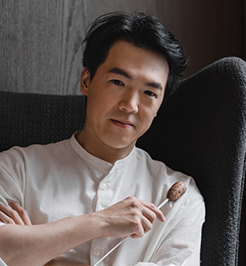
©Keith Hiro_HK Phil
-
Kyohei Sorita/Piano
Kyohei Sorita has emerged as one of Japan’s most celebrated pianists since winning the silver medal at the 2021 Chopin Competition in Warsaw. He is the founder, producer, and conductor of the Japan National Orchestra and operates his own record label, NOVA. Sorita also produces "Solistiade," a music salon fostering connections between young musicians and music lovers. Recognized by Forbes as one of Asia's most influential business personalities
under 30, Sorita is a dynamic force both on and off the stage.
In August 2025, Sorita will make his highly anticipated debut at the Salzburger Festspiele with the Mozarteum Orchestra, becoming the first Japanese pianist since Mitsuko Uchida in 1989 to debut as a soloist with orchestra at the Festspiele. Notably, he will also be the first Japanese artist to perform in the dual role of soloist and conductor at this prestigious event.
Sorita's international career gained momentum in 2023 with a lauded debut at the Munich Philharmonic Orchestra.
His May 2024 performance with the Mozarteumorchester Salzburg, where he dazzled as both pianist and conductor, further solidified his reputation, leading to immediate re-invitations from both orchestras.
At the outset of the 2023/24 season, Sorita appeared as pianist and conductor with the Japan National Orchestra at the Südtirol Festival Meran, hailed as "the discovery of the festival." Shortly thereafter, he collaborated with the NDR Elbphilharmonie Orchestra under Alan Gilbert during a Japan tour featuring Brahms' Piano Concerto No. 1. February 2024 marked another milestone with his debut with the Residentie Orkest, performing in The Hague and Utrecht, followed by an Asian tour with the Basel Chamber Orchestra later that season.
The current season has seen Sorita debut with the Württemberg Chamber Orchestra Heilbronn and announce return engagements with the Munich Philharmonic and Tonkünstler Orchestra. Upcoming seasons include a debut at the Klavierfestival Ruhr, reappearances with the Mozarteum Orchestra, a Japan tour with members of the Scharoun
Ensemble of the Berlin Philharmonic, and another Japan tour with the Tonhalle Orchestra Zurich under Paavo Järvi.
Sorita has performed with esteemed ensembles such as the Deutsches Symphonie-Orchester Berlin, Orchestra Sinfonica Nazionale della RAI, Mariinsky Theatre Orchestra, Warsaw National Philharmonic, Russian National Orchestra, and the NHK, Yomiuri, and Tokyo Metropolitan Symphony Orchestras. He has worked under renowned conductors including Robin Ticciati, Sebastian Weigle, Yutaka Sado, Andrea Battistoni, Andrey Boreyko, and Mikhail Pletnev.
Kyohei Sorita became known to a wider audience overnight when he won first prize, the audience prize and three other special prizes at the 81st Japanese Music Competition in 2012. Sorita pursued advanced studies at the Tchaikovsky Conservatory in Moscow and the Chopin University of Music in Warsaw. Early highlights included his solo recital debut and performance with the Mariinsky Orchestra at the Russian International Music Festival, followed by a triumphant sold-out recital at Tokyo’s Suntory Hall in 2016.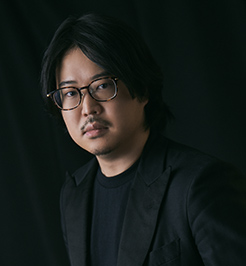
©Yuji Ueno